Freelancing for Beginners: Complete A–Z Guide to Starting an Online Freelance Career (Part 6)
 Faceroom
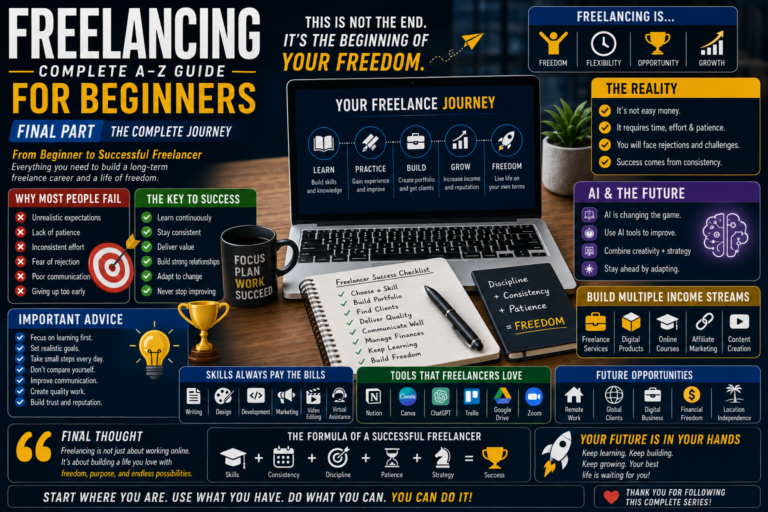
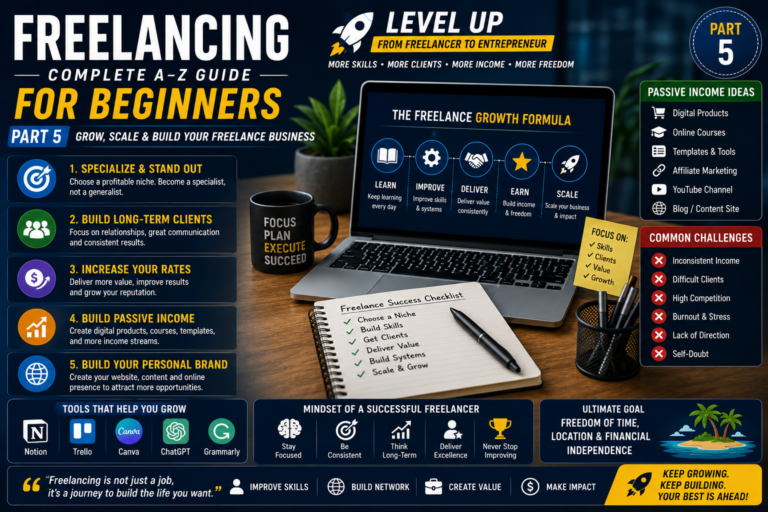
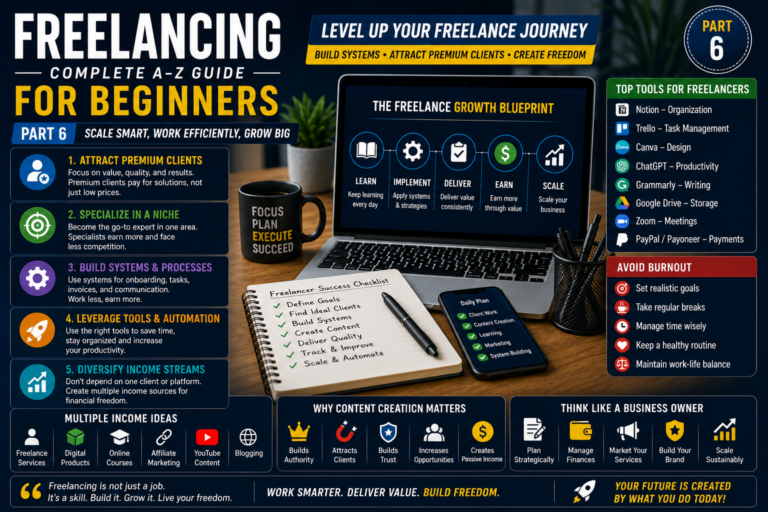
In Part 5, we discussed how freelancers can grow professionally by specializing in niches, increasing rates, building passive income, and creating a personal brand.In this sixth part, we will focus on advanced freelance growth strategies such as scaling your freelance income, attracting premium clients, building systems, using automation tools, and transforming freelancing into a long-term digital business.
At this stage, the goal is no longer simply finding small projects. The objective becomes creating stability, efficiency, and sustainable growth.
What Does Scaling Mean in Freelancing?
Scaling means increasing your income and opportunities without working endlessly for small projects.
Many beginners think freelancing only means exchanging time for money. However, advanced freelancers learn how to:
• work smarter
• increase efficiency
• attract better clients
• charge higher rates
• create systems
Scaling allows freelancers to grow beyond survival-level income.
Difference Between Cheap Clients and Premium Clients
Not all clients are the same.
Cheap clients usually:
• focus only on low prices
• request too many revisions
• communicate poorly
• undervalue your work
Premium clients usually:
• care about quality
• respect professionalism
• pay fairly
• value reliability
• offer long-term opportunities
One of the biggest growth steps in freelancing is learning how to attract better clients instead of chasing every small project.
How to Attract Premium Clients
Premium clients look for freelancers who appear professional and trustworthy.
To attract them:
• improve your portfolio quality
• communicate professionally
• specialize in a niche
• create a strong online presence
• show results instead of promises
• build credibility through reviews and content
Clients often pay more when they trust your expertise.
Importance of Building Systems
Many freelancers become overwhelmed because they manage everything manually.
Professional freelancers create systems to save time and improve organization.
Examples include:
• project management systems
• reusable templates
• client onboarding forms
• pricing documents
• automated invoices
• organized file storage
Systems reduce stress and increase productivity.
Useful Tools for Freelancers
Modern freelancers use many tools to improve efficiency.
Popular freelance tools include:
• Notion for organization
• Trello for task management
• Canva for design
• Grammarly for writing
• ChatGPT for productivity
• Google Drive for file storage
• Zoom for meetings
• PayPal or Payoneer for payments
The right tools can save time and improve work quality.
Why Time Management Becomes More Important
As freelancers grow, they often handle multiple clients at the same time.
Without proper time management, projects can become chaotic.
Professional freelancers often:
• schedule their tasks
• prioritize important work
• avoid distractions
• set clear deadlines
• separate work time from rest time
Good organization increases both productivity and client satisfaction.
How to Avoid Burnout
Burnout is common in freelancing, especially for people who overwork constantly.
Symptoms may include:
• exhaustion
• loss of motivation
• stress
• poor concentration
• declining creativity
To avoid burnout:
• take breaks
• maintain healthy sleep
• avoid excessive workloads
• set realistic schedules
• create work-life balance
Long-term success requires sustainability.
Building Multiple Income Streams
Many advanced freelancers avoid depending on only one client or one platform.
Instead, they diversify their income sources.
Examples include:
• freelance services
• affiliate marketing
• YouTube content
• blogging
• digital products
• coaching
• online courses
Multiple income streams provide better financial security.
Creating a Freelance Website
A personal website can significantly improve credibility.
Your website may include:
• portfolio
• service descriptions
• testimonials
• pricing information
• contact form
• blog articles
A professional website helps clients take you more seriously.
It also allows you to attract clients outside freelance marketplaces.
Why Content Creation Helps Freelancers
Content creation has become a powerful marketing tool.
Freelancers who share useful content online often attract more opportunities.
Examples include:
• tutorial videos
• blog posts
• LinkedIn posts
• Facebook content
• TikTok educational videos
Sharing knowledge helps build authority and trust.
Over time, content itself can become a client acquisition system.
The Importance of Reputation
In freelancing, reputation is extremely valuable.
A strong reputation can lead to:
• repeat clients
• referral
• higher rates
• better opportunities
• long-term stability
Reputation is built through:
• professionalism
• consistency
• quality work
• honesty
• communication
One satisfied client can sometimes bring many future opportunities.
Thinking Like a Business Owner
At advanced levels, freelancing becomes similar to running a business.
This means:
• managing finances
• marketing services
• improving systems
• building networks
• planning long-term growth
Freelancers who think strategically usually grow faster than those who only focus on short-term projects.
Final Thoughts for Part 6
Freelancing can evolve from simple online work into a serious digital career or business.
The freelancers who scale successfully are usually those who:
• build systems
• specialize strategically
• improve communication
• manage time wisely
• focus on long-term growth
Success rarely happens overnight. It is built gradually through consistency, professionalism, and continuous improvement.
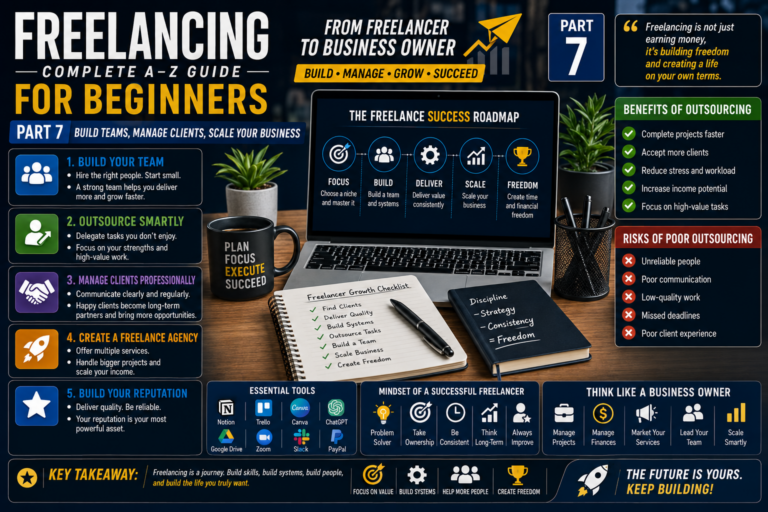
In Part 7, we will discuss:
• creating freelance teamsoutsourcing work* building agencies* advanced client management* long-term financial freedom through freelancingEvery stage of freelancing teaches valuable lessons that help build a stronger future.
About the Author