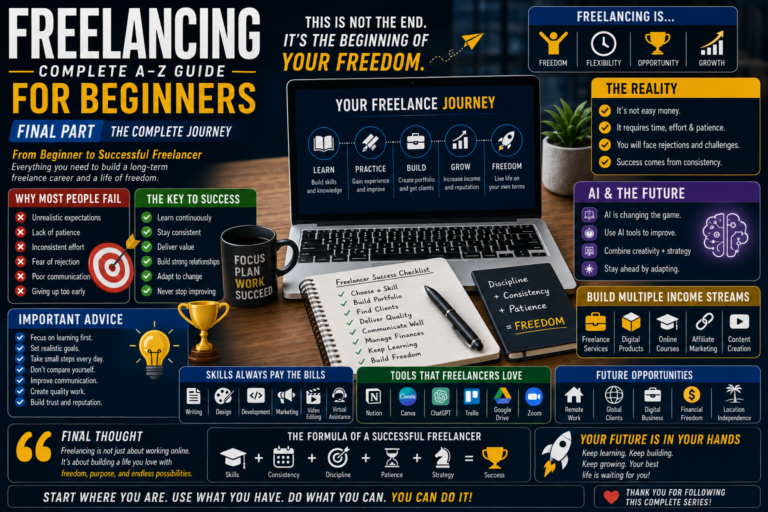
Freelancing for Beginners: Complete A–Z Guide to Starting an Online Freelance Career (Final Part)
 Faceroom
Throughout this complete freelancing series, we explored everything from the basics of freelancing to advanced strategies for building a long-term online career.We discussed:
• how freelancing works
• choosing profitable skills
• creating professional profiles
• building portfolios
• finding clients
• writing proposals
• pricing services
• avoiding scams
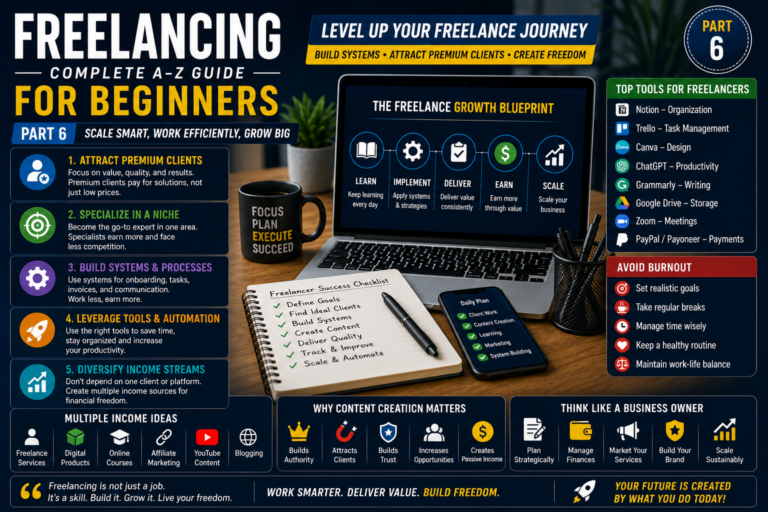
• scaling income
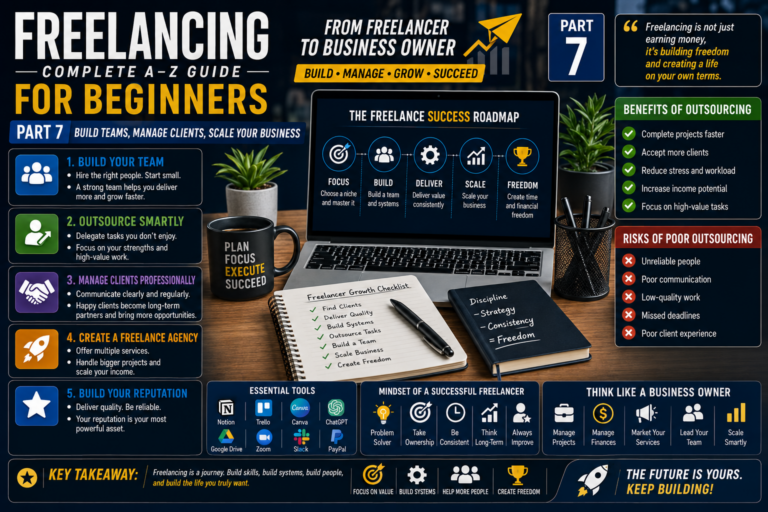
• building teams
• creating agencies
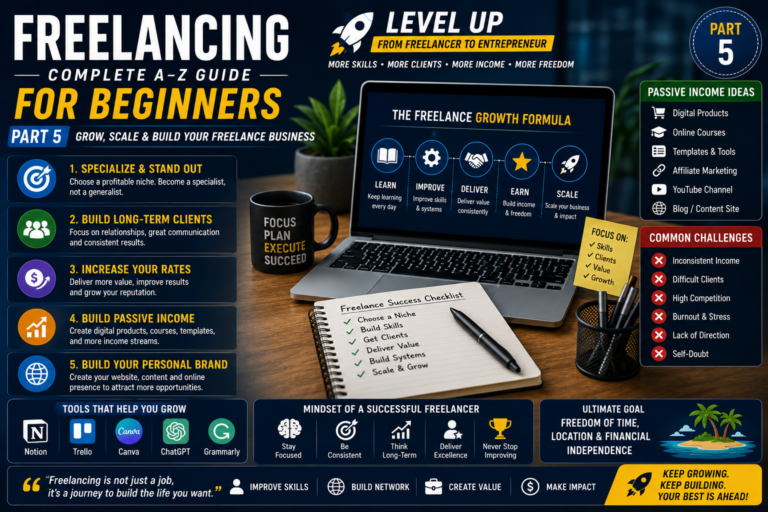
• developing personal brands
In this final part, we will focus on the long-term mindset, future opportunities, and the reality of building a sustainable freelance career in the modern digital world.
Freelancing is not only about earning money online. For many people, it becomes a path toward independence, flexibility, creativity, and personal growth.
The Reality About Freelancing
One of the biggest misconceptions online is that freelancing is “easy money.”In reality, freelancing requires:
• discipline
• patience
• consistency
• communication skills
• continuous learning
At the beginning, progress may feel slow.You may experience:
• rejected proposals
• difficult clients
• low income periods
• self-doubt
• competition
These challenges are normal.
Every successful freelancer once struggled with uncertainty and inexperience.
Why Most People Fail in Freelancing
Many people fail not because freelancing does not work, but because they quit too early.
Common reasons include:
• unrealistic expectations
• lack of patience
• inconsistent effort
• fear of rejection
• poor communication
• giving up after small failures
Freelancing rewards people who continue improving even during difficult periods.
Persistence is often more important than talent.
The Importance of Continuous Learning
The online world changes constantly.
New technologies, AI tools, platforms, and digital trends appear every year.
Freelancers who stop learning eventually become outdated.
Successful freelancers continue improving:
• technical skills
• communication
• marketing
• productivity
• business knowledge
• financial management
Learning should become part of your long-term lifestyle.
How AI Is Changing Freelancing
Artificial intelligence is transforming many freelance industries.
AI tools can now help with:
• writing
• graphic design
• coding
• translation
• research
• video editing
• automation
Some freelancers fear AI, but smart freelancers learn how to use it as an advantage.
AI does not completely replace skilled freelancers. Instead, it rewards people who combine:
• creativity
• strategy
• communication
• human understanding with modern tools.
Freelancers who adapt to technology often grow faster.
Why Personal Branding Will Become More Important
Competition online continues increasing every year.
Because of this, personal branding becomes extremely valuable.
Clients often choose freelancers who:
• appear professional
• share useful content
• communicate clearly
• demonstrate expertise
• build trust online
Your reputation and visibility may eventually become more powerful than platforms themselves.
Freelancing and Financial Freedom
Freelancing can create opportunities for:
• remote income
• flexible schedules
• location independence
• online business growth
• passive income streams
However, financial freedom rarely happens instantly.
It is usually built slowly through:
• discipline
• smart decisions
• consistency
• skill development
• long-term thinking
The people who succeed financially are often those who stay focused for years, not weeks.
Building a Freelance Lifestyle
One of the greatest advantages of freelancing is flexibility.
Many freelancers eventually:
• work remotely
• travel while working
• choose their own schedule
• create independent careers
• spend more time with family
• work with international clients
Freelancing gives people more control over how they live and work.
But freedom also comes with responsibility.
Freelancers must manage:
• time
• finances
• motivation
• productivity
• client relationships
Self-discipline becomes essential.
The Future of Freelancing
Remote work continues growing worldwide.
More companies are hiring:
• remote workers
• digital creators
• online consultants
• freelancers
• virtual assistants
This means opportunities will likely continue increasing in many online industries.
Some growing freelance sectors include:
• AI services
• content creation
• video editing
• social media marketing
• automation
• web development
• online education
• digital consulting
Freelancing is becoming a major part of the future digital economy.
Important Advice for Beginners
If you are just starting:
• focus on learning first
• stay patient
• practice regularly
• avoid comparing yourself too much
• improve communication skills
• create quality work
• build trust gradually
Do not expect perfection immediately.
Progress in freelancing usually happens step by step.
Small improvements made consistently over time create big long-term results.
Your First Goal Should Not Be Huge Money
At the beginning, your first goals should be:
• learning skills
• gaining experience
• building confidence
• understanding clients
• creating reputation
Once you become skilled and reliable, higher income opportunities usually follow naturally.
Strong foundations matter more than quick shortcuts.
Final Conclusion
Freelancing is not a guaranteed shortcut to success, but it is one of the most accessible opportunities in the digital world today.
With internet access, useful skills, consistency, and patience, many people can gradually build income and independence online.
The freelancers who succeed long-term are usually those who:
• continue learning
• adapt to change
• stay professional
• think strategically
• remain disciplined
• never stop improving
Every expert freelancer once started as a beginner with no clients, no reviews, and many doubts.
Success is built one step at a time.
Your freelance journey starts the moment you decide to keep learning and keep moving forward.
About the Author