Freelancing for Beginners: Complete A–Z Guide to Starting an Online Freelance Career (Part 4)
 Faceroom
In Part 1, we explored the fundamentals of freelancing and how online freelance work operates. In Part 2, we discussed how to choose skills, build a professional profile, and create a portfolio. In Part 3, we focused on finding freelance jobs, writing proposals, and getting your first clients.
In this fourth part, we will discuss one of the most important topics in freelancing: pricing your services, avoiding scams, managing income, and growing from a beginner freelancer into a professional.
These topics are extremely important because many freelancers fail not because of lack of skill, but because they struggle with money management, pricing, or client safety.
How to Set Your Freelance Prices
One of the hardest decisions for beginners is choosing how much to charge.
Many new freelancers either charge extremely low prices or unrealistically high prices.
At the beginning, your goal should not only be making money quickly. Your first objective is to:
• gain experience
• build reviews
• improve confidence
• create client relationships
This means your starting price should be competitive but still reasonable.
Common Freelance Pricing Models
Freelancers usually use different pricing systems depending on the type of work.
The most common pricing models include:
• hourly pricing
• fixed project pricing
• monthly retainers
• package pricing
For example, a graphic designer may charge per logo project, while a virtual assistant may charge hourly.
Understanding the right pricing structure helps you work more professionally.
How Beginners Should Price Their Services
As a beginner, it is often better to start with moderate pricing while focusing on quality.
Avoid charging extremely cheap prices because:
clients may not take you seriously
low prices attract problematic clients
you may become overworked
Instead, choose fair pricing based on:
project difficulty
time required
your skill level
market competitionAs your reviews and experience increase, you can gradually raise your rates.
Why Communication About Pricing Matters
Many freelancer-client problems come from unclear communication.
Before starting a project, make sure both sides understand:
• total price
• delivery deadline
• revision policy
• project scope
• payment method
Clear communication prevents misunderstandings later.
Professional freelancers always clarify project details before accepting work.
How to Avoid Freelance Scams
Unfortunately, scams exist on freelance platforms and social media.
Beginners are often targeted because they may not recognize warning signs.
Common freelance scams include:
• clients asking for free full work before payment
• fake payment screenshots
• requests to communicate outside secure platforms immediately
• suspicious cryptocurrency offers
• unrealistic high-paying jobs
• fake “registration fees”If something sounds too good to be true, it usually is.
Warning Signs of Scam Clients
Be careful if a client:
• refuses secure payment methods
• pressures you urgently
• avoids discussing payment clearly
• asks for sensitive personal information
• promises huge income for simple work
• sends suspicious links or filesTrustworthy clients usually communicate professionally and clearly.
Safe Payment Practices
To protect yourself:
• use trusted freelance platforms when possible
• avoid working without agreement
• request milestone payments for large projects
• save screenshots and conversations
• confirm payments before delivering final files
Freelancing becomes safer when you work professionally and carefully.
How to Manage Freelance Income
Freelance income can sometimes be inconsistent, especially at the beginning.
One month may be very active while another month may be slower.
Because of this, good financial management is important.
Try to:
• save part of your earnings
• avoid unnecessary spending
• invest in improving your skills
• keep emergency funds
• track your income and expenses
Professional freelancers treat freelancing like a real business.
Importance of Time Management
Freelancers are responsible for managing their own schedule.
Without discipline, it becomes easy to procrastinate or miss deadlines.
Useful time management habits include:
• creating daily work plans
• setting realistic deadlines
• avoiding distractions
• prioritizing important tasks
• taking breaks to avoid burnout
Good organization improves productivity and reduces stress.
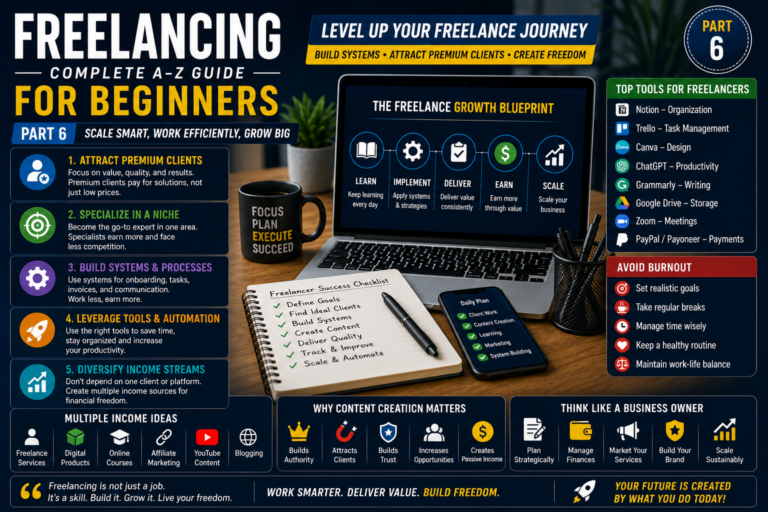
How to Grow as a Freelancer
Long-term freelance success comes from continuous improvement.
As you gain experience:
• improve your skills
• increase your prices
• specialize in profitable niches
• build a professional website
• grow your network
• create long-term client relationships
The freelancers who continue learning usually grow the fastest.
Building Your Personal Brand
Successful freelancers often build a strong online identity.
Your personal brand may include:
• professional social media pages
• portfolio website
• LinkedIn profile
• consistent design style
• quality communication
A strong brand helps clients remember and trust you more easily.
From Beginner to Professional Freelancer
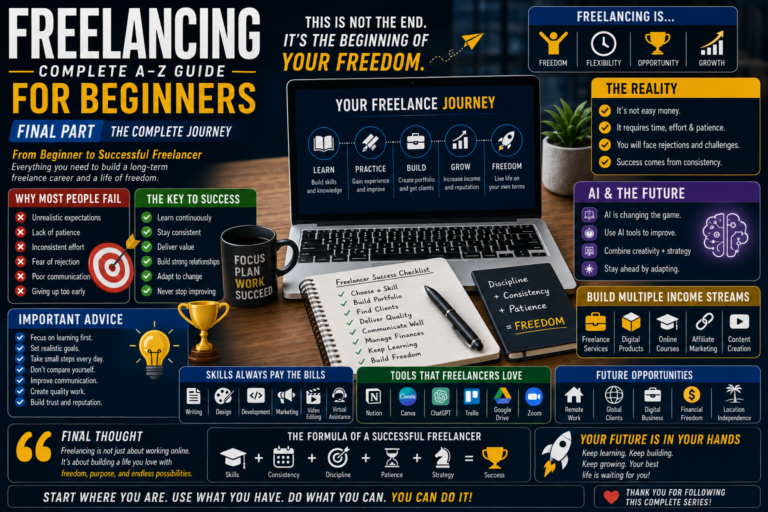
Every professional freelancer started as a beginner.
The difference between successful freelancers and unsuccessful ones is usually consistency.
Successful freelancers:
• continue learning
• stay patient
• improve communication
• deliver quality work
• remain disciplined
Freelancing is not an instant success system. It is a long-term career path that rewards persistence.
Final Thoughts for Part 4
Learning how to price services, avoid scams, manage money, and grow professionally is essential for building a successful freelance career.
Freelancing offers real opportunities, but it also requires responsibility, patience, and professionalism.
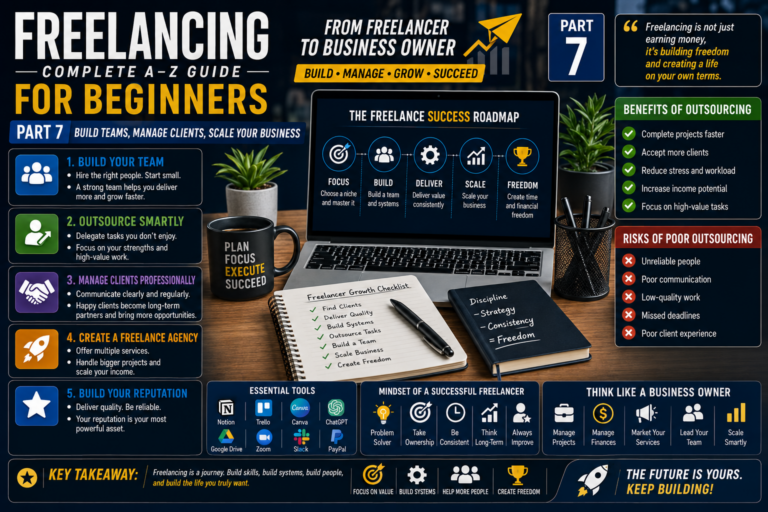
In Part 5, we will discuss:
• advanced freelance growth strategies
• building passive income
• scaling freelance work
• creating a freelance business
• long-term success tips
Your freelance journey becomes stronger with every project and every lesson learned.
About the Author