Freelancing for Beginners: Complete A–Z Guide to Starting an Online Freelance Career (Part 7)
 Faceroom
In Part 6, we discussed how freelancers can scale their income, attract premium clients, build systems, and transform freelancing into a long-term digital business.
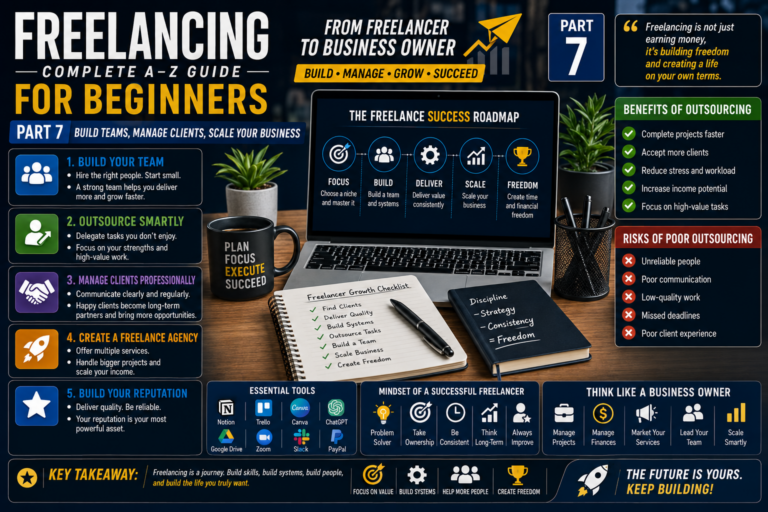
In this seventh part, we will explore advanced freelance expansion strategies such as outsourcing work, building small teams, creating freelance agencies, improving client management, and working toward long-term financial freedom.
At this stage, freelancing becomes more than personal work. It starts evolving into a scalable online business model.
Why Many Freelancers Eventually Build Teams
As freelancers gain more clients and larger projects, handling everything alone becomes difficult.
Many successful freelancers eventually:
• outsource certain tasks
• collaborate with specialists
• hire assistants
• create small remote teams
This helps them:
• complete projects faster
• handle bigger clients
• increase income
• reduce workload
• scale operations
Building a team does not mean creating a huge company immediately. Even small collaborations can improve efficiency significantly.
What Is Outsourcing in Freelancing?
Outsourcing means hiring another person to complete part of a project.
For example:
• a video editor may outsource thumbnail design
• a writer may outsource proofreading
• a web designer may outsource coding
• a social media manager may outsource content creation
Outsourcing allows freelancers to focus on their strongest skills while improving productivity.
Benefits of Outsourcing
When done correctly, outsourcing offers several advantages:
• faster project delivery
• ability to accept more work
• improved specialization
• reduced stress
• higher earning potential
However, outsourcing also requires organization and responsibility.
The freelancer remains responsible for the final quality delivered to clients.
Risks of Poor Outsourcing
Outsourcing without proper management can create serious problems.
Common mistakes include:
• hiring unreliable people
• poor communication
• unclear instructions
• low-quality work
• missed deadlines
Before outsourcing, always:
• test small tasks first
• communicate expectations clearly
• review work carefully
• maintain professionalism
Trust should be built gradually.
Building a Freelance Team
A freelance team does not need to be large.
Many successful freelancers begin with:
• one assistant
• one editor
• one designer
• one writer
The goal is not simply adding people, but creating reliable collaboration.
A strong small team can outperform a large disorganized group.
Creating a Freelance Agency
Some freelancers eventually transform their services into small agencies.
A freelance agency usually:
• manages multiple clients
• offers multiple services
• works with teams
• operates under a business name
Examples include:
• social media agencies
• design agencies
• content writing agencies
• marketing agencies
Agencies often generate higher income because they can handle larger projects and more clients simultaneously.
Difference Between Freelancer and Agency Owner
A freelancer mainly sells personal time and skills.
An agency owner focuses more on:
• managing people
• organizing projects
• acquiring clients
• building systems
• scaling operations
This shift requires different skills beyond technical expertise.
Leadership and organization become increasingly important.
Importance of Client Management
As freelance projects grow, client management becomes critical.
Professional client management includes:
• regular communication
• project updates
• organized deadlines
• clear agreements
• fast problem-solving
Good client management improves trust and increases long-term cooperation.
Many clients stay loyal because of professionalism rather than technical perfection.
Why Reputation Becomes More Valuable Over Time
In advanced freelancing, reputation becomes one of your biggest assets.
A strong reputation can generate:
• referrals
• repeat clients
• partnerships
• premium opportunities
• higher pricing power
Building a reputation takes time, but losing it can happen quickly.
Professionalism should remain a priority at every stage.
How Advanced Freelancers Find Clients
Experienced freelancers often stop relying entirely on freelance platforms.
Instead, they attract clients through:
• personal websites
• LinkedIn networking
• social media content
• YouTube channels
• referrals
• email outreach
• online communities
This gives more control and reduces dependence on marketplace algorithms.
Financial Discipline for Freelancers
As income increases, financial discipline becomes even more important.
Professional freelancers often:
• separate business and personal finances
• save money regularly
• reinvest into tools and learning
• create emergency funds
• diversify income streams
Financial stability helps freelancers survive slow periods and grow sustainably.
Why Personal Branding Matters More at Advanced Levels
At beginner level, freelancers mainly compete through price.
At advanced levels, strong personal branding becomes more important.
Your brand may include:
• professional website
• visual identity
• content style
• online reputation
• social media presence
• expertise positioning
Strong branding helps clients recognize your value faster.
Long-Term Vision in Freelancing
Freelancing becomes more powerful when viewed long-term.
Instead of thinking only about today’s income, successful freelancers think about:
• future opportunities
• skill growth
• reputation
• networking
• scalability
• financial freedom
The freelancers who stay patient and strategic usually achieve the best long-term results.
Can Freelancing Lead to Financial Freedom?
For some people, yes.
Freelancing can eventually create:
• stable remote income
• business ownership
• passive income opportunities
• location independence
• flexible lifestyle
However, financial freedom rarely comes quickly.
It usually requires:
• discipline
• consistency
• learning
• patience
• professional growth
Freelancing rewards people who continuously improve over time.
Final Thoughts for Part 7
Freelancing can evolve far beyond simple online tasks. With the right mindset and strategy, it can become a scalable digital business and a long-term source of independence.
The freelancers who grow the most are usually those who:
• think strategically
• build systems
• create strong reputations
• manage clients professionally
• continue learning
In next Part , we will explore:
• advanced automation
• AI tools for freelancers
• productivity systems
• building global online opportunities
• future trends in freelancing
Freelancing continues evolving, and adaptability is one of the greatest advantages you can develop.
About the Author